

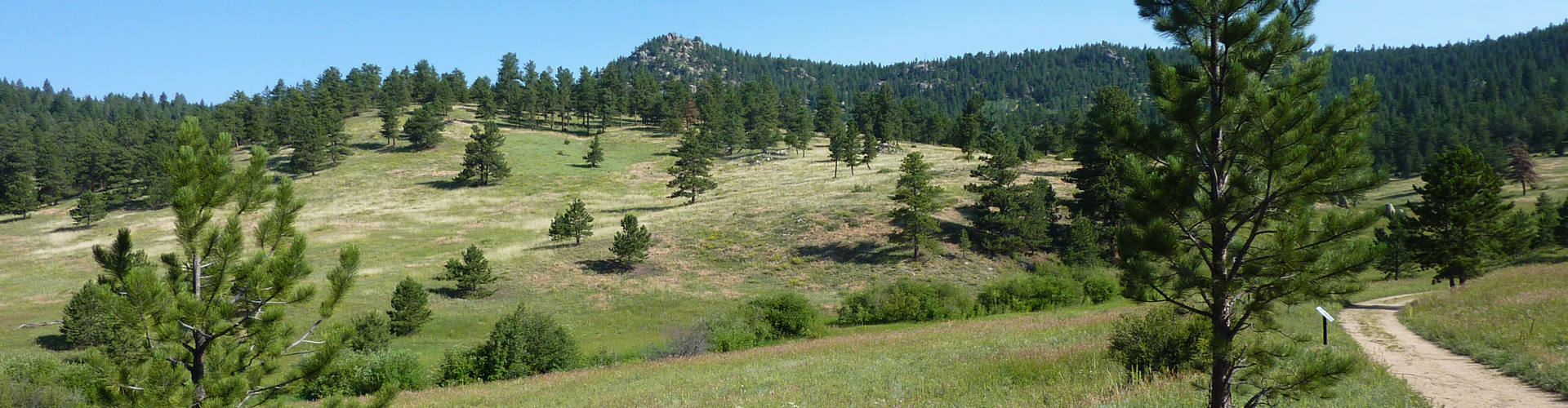
Walker Ranch is listed on the National Register of Historic Places as a cultural landscape. It also offers a wide range of ecosystems to explore.
Walker Ranch
Trails
-
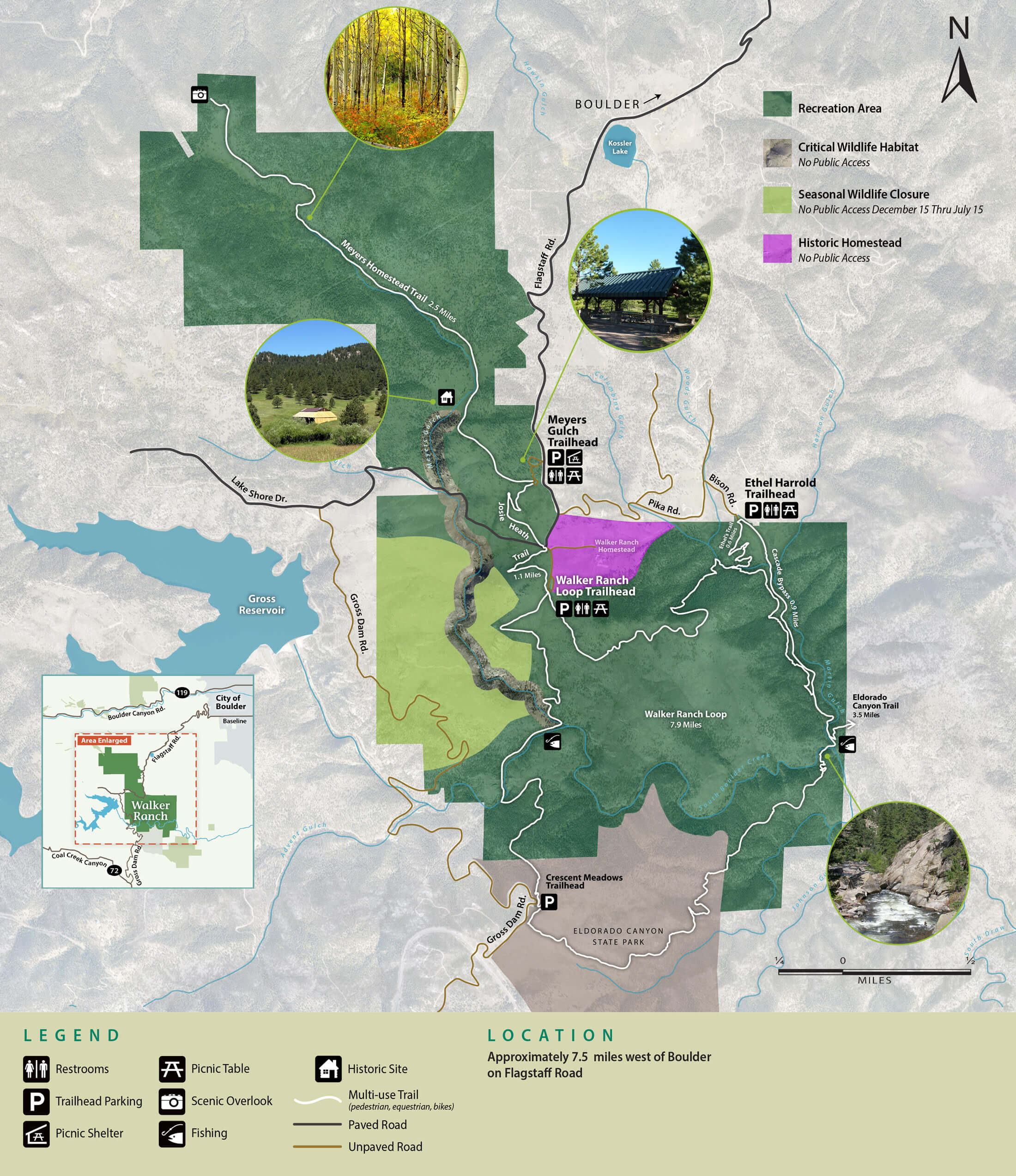
Walker Ranch Loop
7.9 miles – Moderate


-
Josie Heath Trail
1.1 miles – Easy -
Meyers Homestead Trail
2.5 miles – Moderate -
Cascade Bypass
0.9 miles – Moderate -
Ethel’s Trail
0.6 miles – Moderate
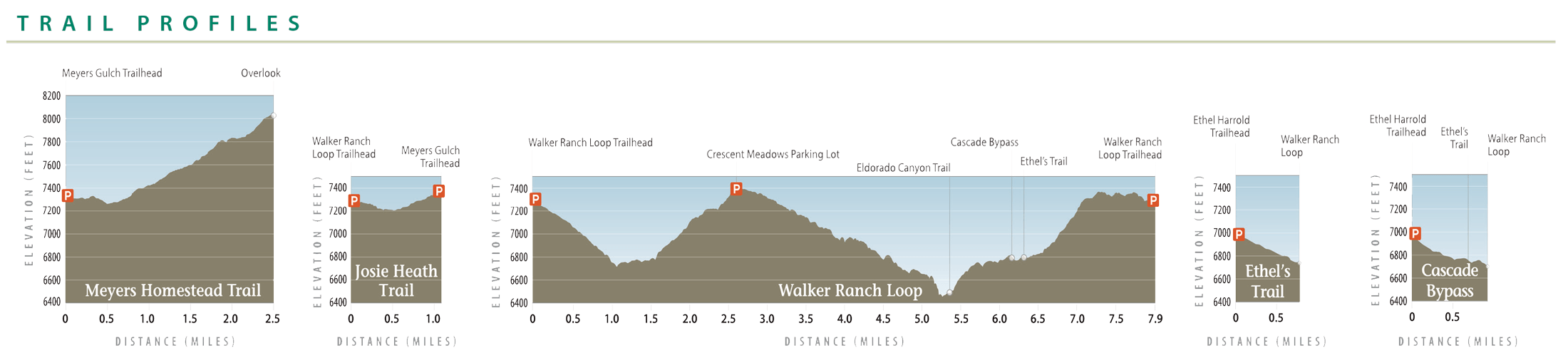
The Wall: Walker Ranch Loop includes a 500-foot cliff-like section of stone steps that is not recommended for horses.
Rules & Regulations

Day Use Only

Pets On Leash

Bikes On Designated Trails Only

No Open Fires

No Hunting/Firearms

No Camping
Walker Ranch Loop Trailhead

46 car parking spots

2 ADA spots (1 van accessible)

Restroom

Picnic table located near parking lots
Live view of the Walker Ranch Loop Parking Lot
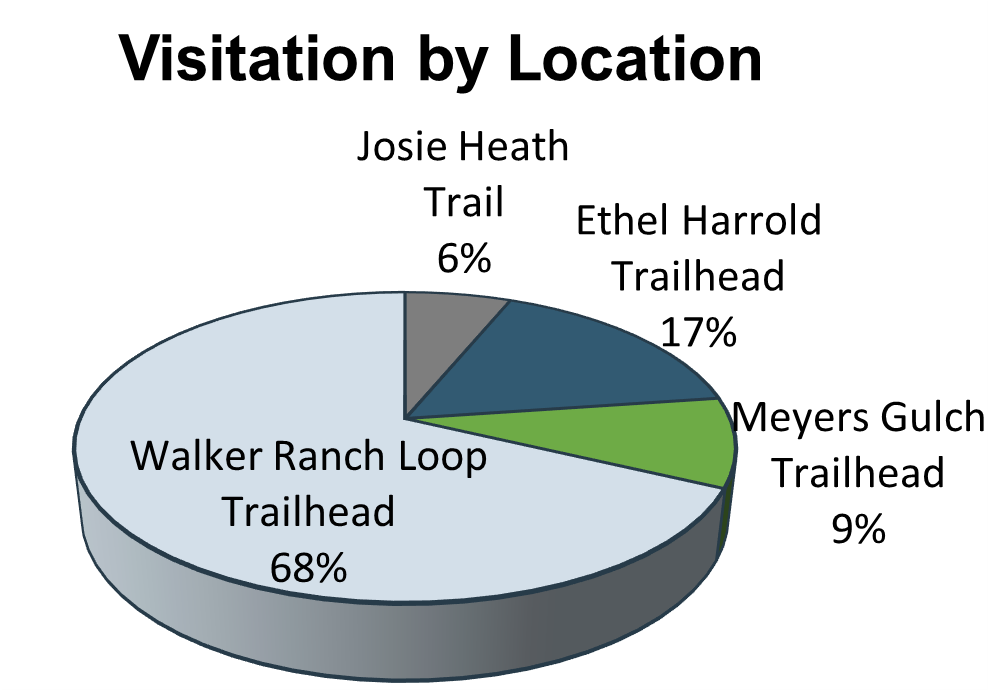
The Walker Ranch Loop and Ethel Harrold trailheads are often full. The Meyers Gulch Trailhead usually has available parking.
Meyers Gulch Trailhead
36 car parking spots
3 ADA van accessible parking spots
Restroom
Picnic tables located near trailhead

Large 50 person group shelter located near trailhead Shelter Reservation Info

2 horse trailer parking spots
Ethel Harrold Trailhead
18 car parking spots
Restroom
Picnic table located near trailhead
Photos
Open Gallery in New Window- Rainbow Trout (limit 4)
- Artificial and live bait permitted
- Fishing on Open Space
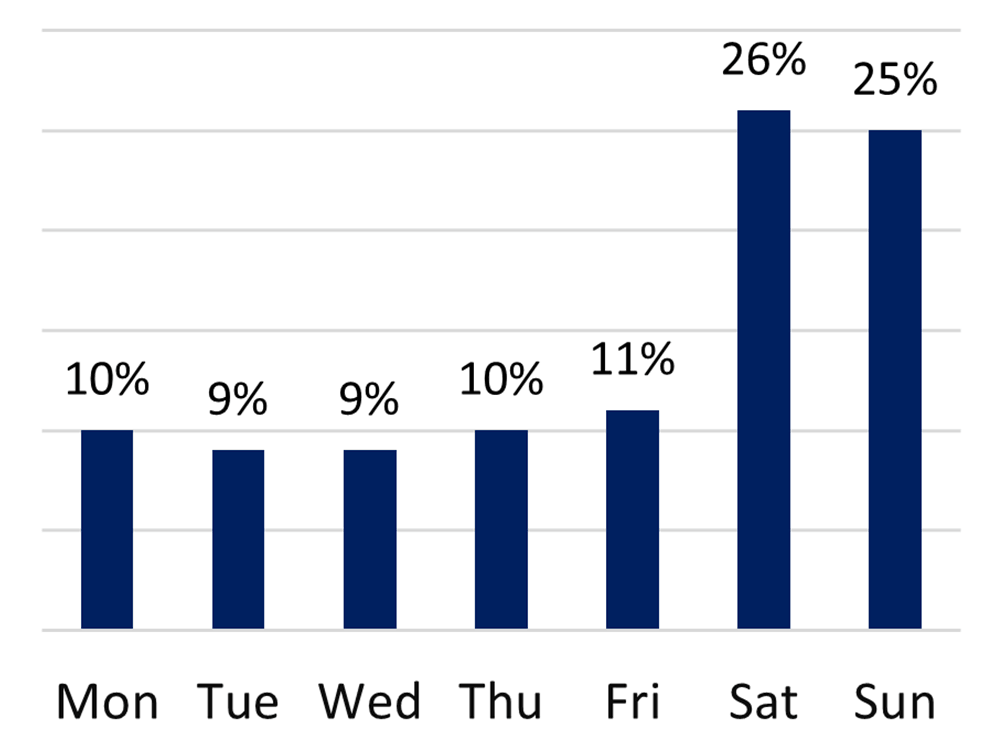
Visitation by Day of Week
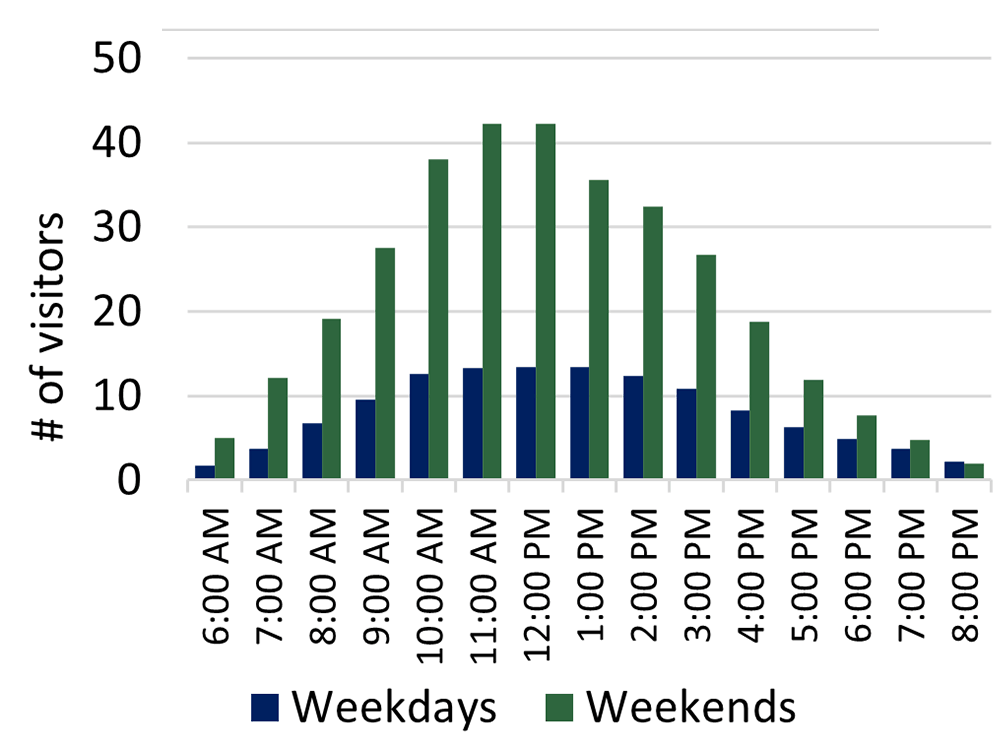
Visitation by Hour
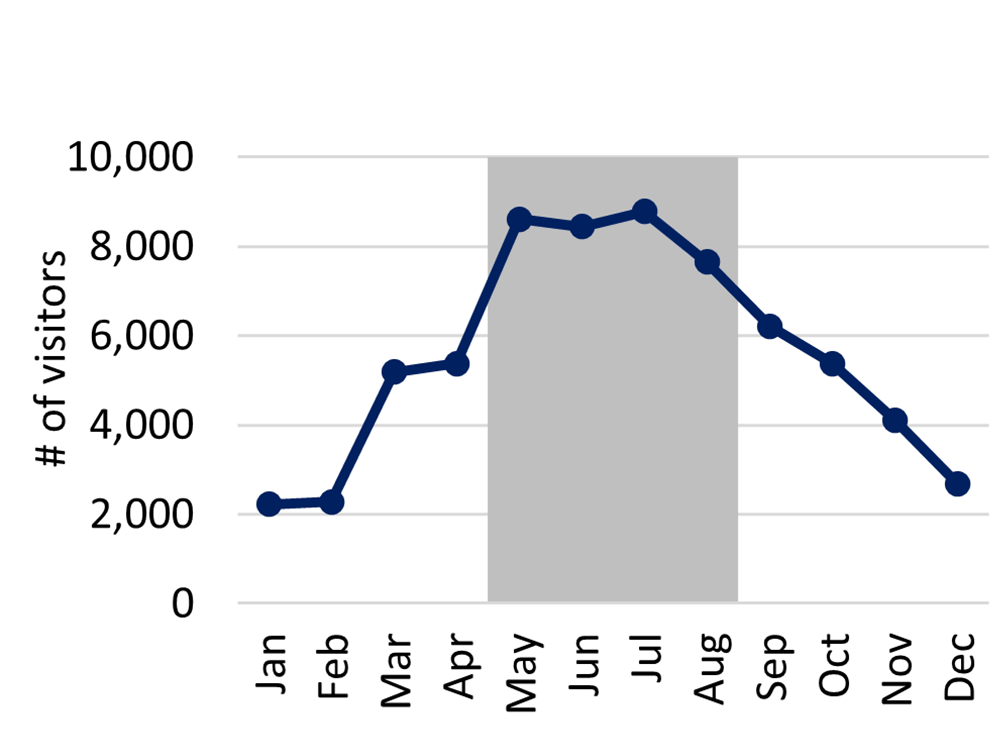
Visitation by Month
Visitation by Location
Along Colorado’s Front Range, the grasslands of the Great Plains rise to meet the rugged peaks of the Southern Rocky Mountains. Where they meet, we find the Foothills, a zone of change between the two landscapes. The Foothills ecosystem covers the 2,880 acres of Walker Ranch. It provides many kinds of habitat for a wide variety of wildlife.
Mammals
- Abert’s squirrel
- Black bear
- Bobcat
- Coyote
- Elk
- Golden-mantled ground squirrel
- Least chipmunk
- Mountain cottontail
- Mountain lion
- Mule deer
- Northern pocket gopher
- Raccoon
- Red fox
Reptiles
- Bullsnake
- Western terrestrial garter snake
Fish
- Rainbow trout
White Wildflowers
- Blazing star (Liatris punctata)
- Fleabane (Erigeron spp)
- Nodding onion (Allium cernuum)
- Yarrow (Achillea lanulosa)
Yellow Wildflowers
- Blanket flower (Gaillardia aristata)
- Gumweed (Grindelia squarrosa)
- Hairy golden aster (Heterotheca villosa)
- Heart-leaf arnica (Arnica cordifolia)
- Western wallflower (Erysimum asperum)
- Whiskbroom parsley (Harbouris trachypleura)
Orange & Red Wildflowers
- Indian paintbrush (Castilleja spp)
Pink Wildflowers
- Mountain ball cactus (Pediocactus simpsonii)
- Wild geranium (Geranium caespitosum)
- Fleabane (Erigeron spp)
Purple & Blue Wildflowers
- Horsemint (Monarda fistulosa)
- Chiming bells or bluebells (Mertensia spp)
- Harebells ( Campanula rotundifolia)
- Lambert’s locoweed or Colorado locoweed (Oxytropis lambertii)
Green Wildflowers
- Western ragweed (Ambrosia psilostachya)
Shrubs
- Boulder raspberry
- Common chockecherry
- Oregon holly grape
- Mountain mahogany
Trees
- Aspen
- Douglas fir
- Narrowleaf cottonwood
- Ponderosa pine
- Rocky Mountain juniper
Walker Ranch sits on one of the oldest rock types in Boulder County. This rock is called Boulder Creek granodiorite, and it is about 1.7 billion years old. It formed when molten rock cooled and hardened slowly underground. Ancient mountain-building then pushed this rock upward.
Over time, these ancient mountains eroded away. This exposed the granodiorite underneath. About 65 million years ago, the Rocky Mountains you see today began to rise. This uplift formed the tall peaks and created rich mineral deposits in the area.
Since that uplift, erosion has been the main force shaping Walker Ranch. It continues to carve the landscape today.
Homesteading
Settler James Walker moved to Boulder from Missouri in 1869. In 1882, he and his wife, Phoebe, filed a homestead claim for 160 acres. The following year, he moved his wife and young son into the newly built ranch house.
Expansive Ranching
Over the next 80 years, the Walker family gained more than 6,000 acres. When the property was sold in 1959, it was one of the largest cattle ranches in the region.
Walker Ranch Homestead
The homestead has original buildings from the 1880s. The one exception is the ranch house, which was rebuilt when it burned down in 1992. The new ranch house uses eco-friendly building methods. It still matches the architecture, design, and materials of the 1880s.
The homestead is open to the public for certain events. Check the Hikes and Events Calendar for details.
Vintage Base Ball
Members of the Colorado Vintage Base Ball Association play a vintage base ball game at the homestead each year. They follow 1860s rules.
Wildfire
In 2000, the Walker Ranch/Eldorado Wildland Fire burned 1,062 acres over five days. You can still see signs of this fire today. Burned trees still stand in the area.